
HOME
On letting go.

On my last night in the house on Ainsworth Street, I tended a fire from sundown to sunup.
At first, it refused to catch.
I tried to get it started with a pile of bills that I’d been collecting, papers I’d set aside for careful disposal. I twisted each one into a long wick, feeding them to the fledgling flame with a lot of determination and little success. After an hour of leaning over a smoky pile of logs and the smoldering remains of bank statements, I gave up. I gathered an armload of cedar branches littering the front yard, tossed them into the smoke, and sat back as the flames leaped skyward.
From my chair beside the fire, I observed the last day of summer dissolve into the first night of fall. The equinox. The end of one life and the beginning of another.
I was given the assignment to tend this fire as the final project for one of my classes. The directive was to stay up all night, feeding the fire and asking death to sit with me and guide me. I’d been dreading the experience and had put it off till the last possible moment for one specific reason: I hate staying up late. The idea that I would be communing with death was far less daunting than the challenge of making it past 11p.m. by myself.
For the first few hours, I simply observed the flames. The early nighttime sounds of the city and a zero-fucks-to-give raccoon accompanied me. I wondered aloud if this was the raccoon that had been consistently taking shits in a large pile on the southern edge of the roof. “Is it you?” I asked. The raccoon responded with a beady-eyed blank stare. I figured the answer was an unapologetic “Yes.”
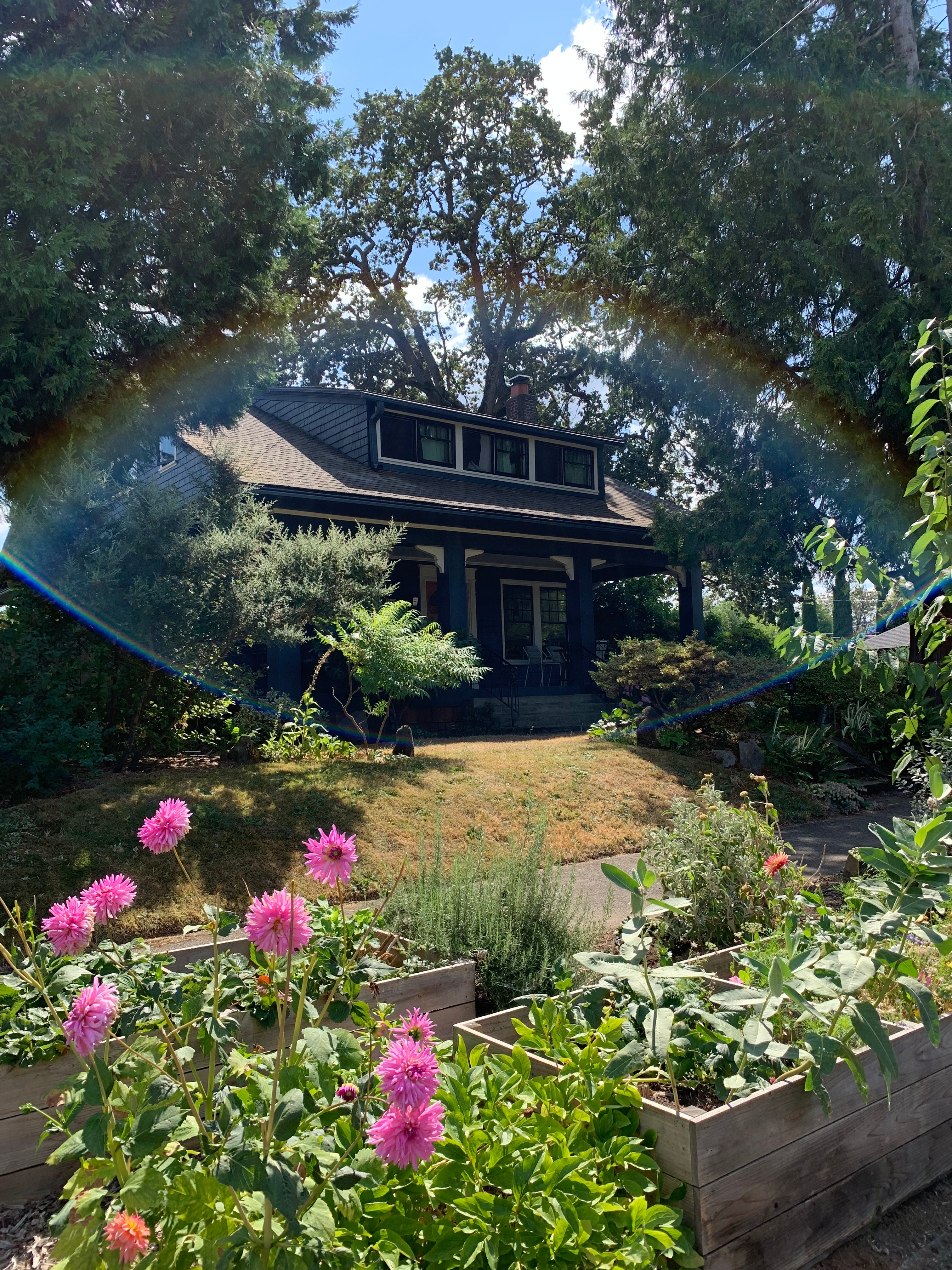
The first stars appeared as my focus shifted to the cedars towering over the roof of the house. Framed in perfect relief against the darkening sky, I said my goodbyes to my constant companions, protectors, and sometimes frustrating garden mates. If you have ever tried to grow things under a cedar, you understand. They are ruthless in their quest for water, and will eventually dominate then strangle most plants with the tangled mats and webs of their far-reaching roots.
Around 10 p.m., Cleo finished her extensive bathing routine, accompanied by an astonishingly loud Ice Cube soundtrack that the whole neighborhood could enjoy, and came down to say goodnight. I gave her a kiss and a hug and didn’t mention that it was my last night in the house. I knew it would be easier for both of us that way.

In 2015, we sold the first home we owned in Portland and spent almost a year in a kind of liminal exile while we attempted to buy a new house. We’d bought the house with a subprime “non-income verification” loan and a wink and a prayer the year before the 2008 financial crisis. With a lot of careful maneuvering and a healthy dose of luck, we managed to refinance and hang on, dumping all of our time, labor, and extra cash into fixing it up over the next seven years. When we sold, we had enough money in hand to believe we’d be able to move to a less chaotic neighborhood, one where the neighbors weren’t cooking meth, pit bulls weren’t running around off leash, and the police weren’t always coming by to mediate domestic disputes.
We were wrong.
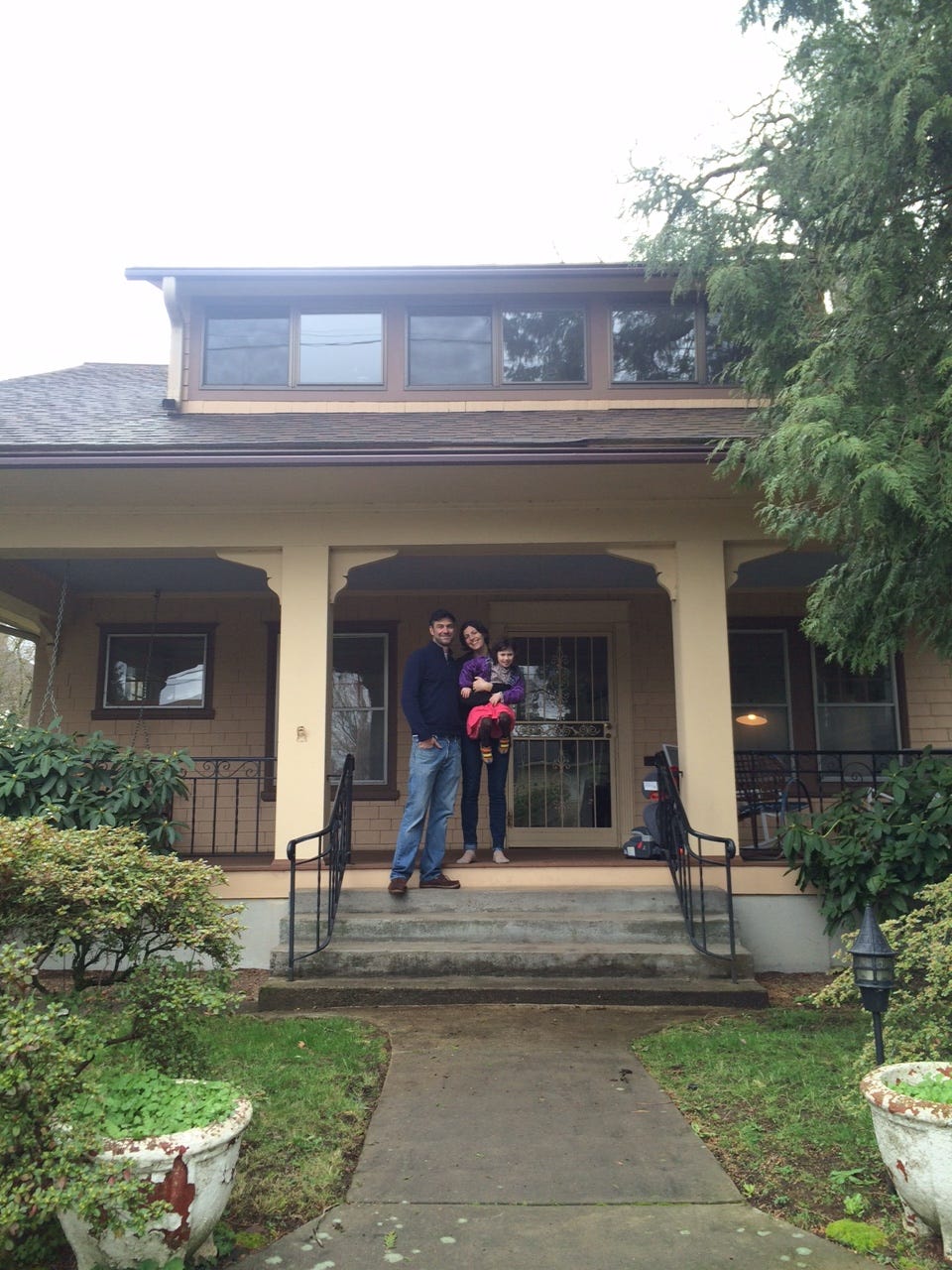
House after house was snatched up by buyers with far more cash. We kept looking, making offers that were never accepted. Eventually, we grew weary and despondent. We talked about whether or not we’d have to leave town and where we might go. And then, the house on Ainsworth Street popped up. It was the kind of house that defines Portland: a perfect craftsman with a huge porch and a great floor plan, on a double lot, in a quiet neighborhood on the edge of the bluffs that overlook the industrial area of Swan Island. From the top floor, you could see the Willamette River and Forest Park. Best of all, it was ringed by extraordinary trees: a huge pink dogwood, a red cedar, an Oregon white oak, and a heritage incense cedar. At that time, it was still legal to write love letters to the seller, so I gave it everything I had. In the letter, I wrote about the trees, and how 4-year-old Cleo had immediately found the swing on the incense cedar, and how much we loved the Oregon oak. I promised to be a thoughtful steward of the house and those trees. I promised we would love the house, the trees, and the garden, and tend to it with care.
Six people made higher offers–one of them was almost $100,000 over ours. And yet, Judy, the owner, chose us. Our agent told us that her daughter had dreamed about Cleo on that swing. Cleo started kindergarten the year we moved in; the month I moved out, she started high school.
As the temperature dipped, I moved closer to the fire, bowing my legs around the perforated drum I’d scavenged by the roadside in Fossil, Oregon. I thought about all the objects I’d leave behind and whether any of it mattered. I wondered if the cats would even notice I was gone.
In the movies, the scene where the woman leaves is one of triumph. She packs the station wagon to the brim, rolls down the windows, turns up the radio, and drives into her new reality with her hair trailing in the breeze. What’s missing in those images is the devastation of sorting through the objects that made up a life; of disentangling the artifacts of togetherness, sifting through the memories of a life built, and making decisions about what you’ll take, and what you’ll leave behind.
For weeks, I disassembled my life while Cleo was at school and Andy was at work. I packed up my studio, sifted through the mazes of boxes stowed in the attic and basement, and carefully picked through the kitchen, pantry, bathroom, closets, and drawers. I tried not to take too much of anything, calculating what I needed to live a much simpler version of my life. I gathered my grandparents’ cookware and dishes, my great-grandmother’s linens, and the items my parents had gifted me from my childhood home over the years. I opened the kitchen cabinets filled with the ceramics and glass that Andy and I made, and I cried. I left him the majority of the bowls, plates, vases, cups, and mugs. I didn’t have the heart to take any of the glass without him gifting it to me. Twenty-five years together, and I don’t own any of Andy’s work. I couldn’t face the art, the books, and the records. I still haven’t been able to do that.
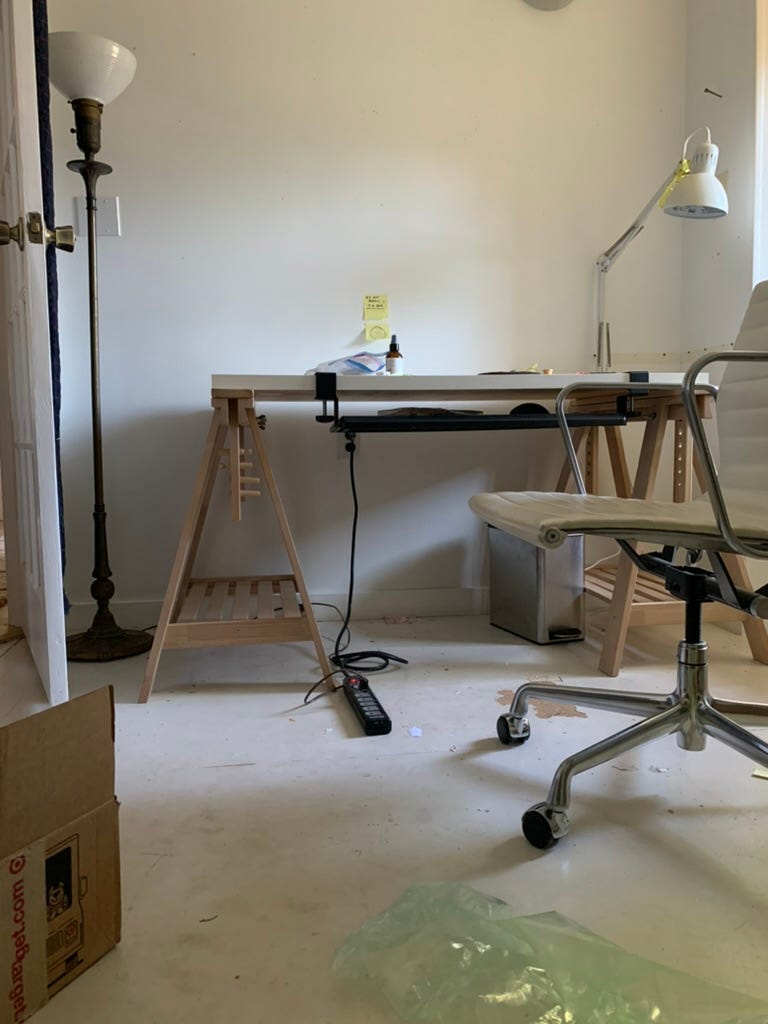
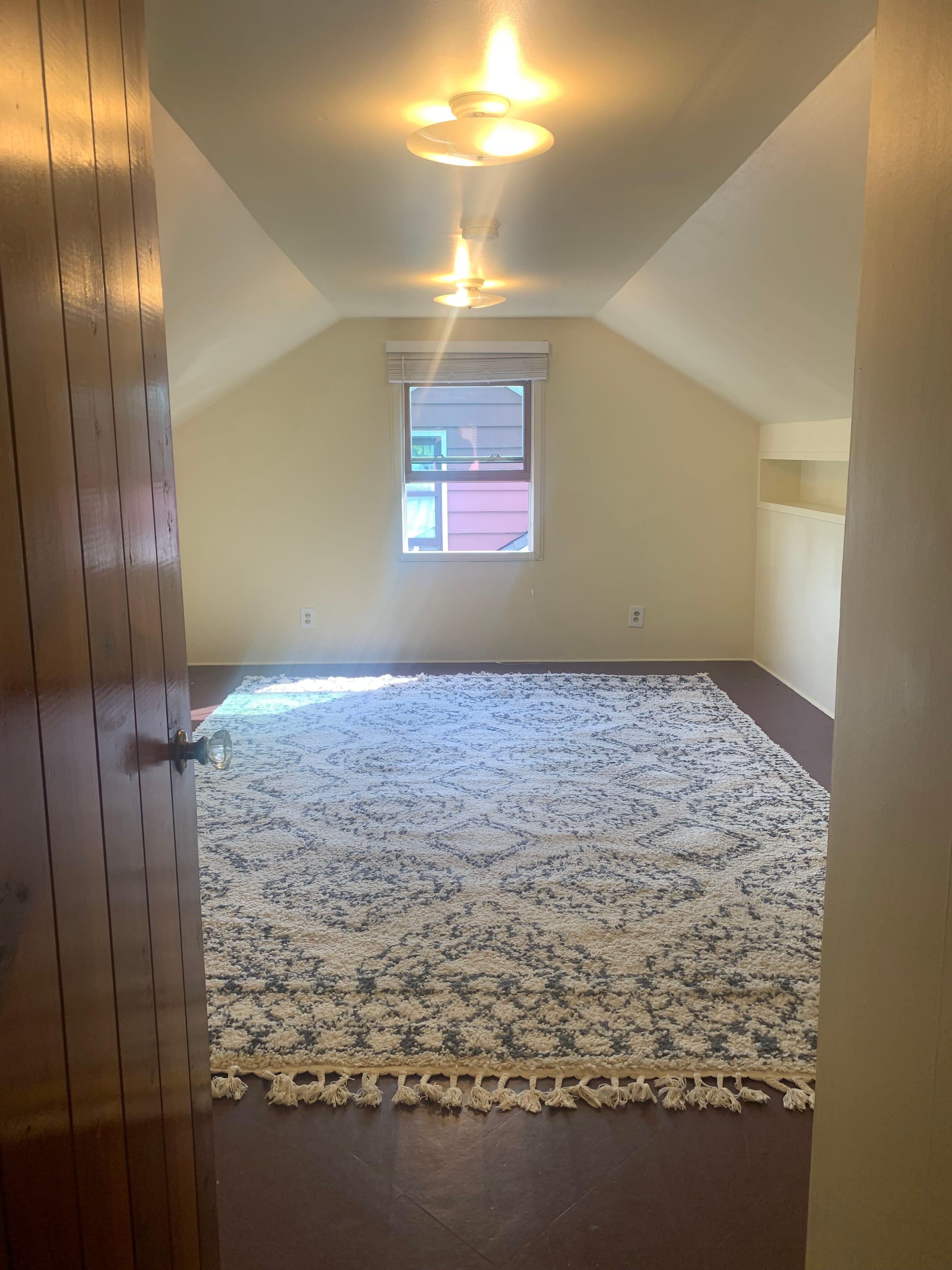
I made trip after trip from my old home to my new house, a rental a few miles away. Along the way, I found two tables on the side of the road, two floor pillows (which I washed and dried in high heat), and a Chemex coffee filter. I thrifted baskets, an iron, a compost bin for the kitchen, two rugs, pillowcases, a hammer, and a cooler. I made two trips to Ikea for a toilet brush, bath mat, and drawer organizers. I filled the refrigerator with condiments from the Grocery Outlet. My friend Shellie gave me a couch, my friend Jenn gave me dining room chairs and a few side tables. My friend Sarah gave me a rug, and my friend Emily gave me her brother’s mattress. And slowly, a new home began to take shape.
My goal was to make the house into a home as quickly as possible, so that Cleo would feel an immediate sense of love and comfort when she saw it. I couldn’t bear the thought of her walking into an empty space dominated by boxes and chaos. The effort was monumental. I was physically at my limit, and emotionally wrecked. But I kept going. As I lugged box after box over the threshold, I thought about Cleo, and how I wanted to model strength and courage in the midst of so much uncertainty and change. So I packed, and unpacked, boxed and unboxed. I scrubbed baseboards and filled cabinets, breathing new life into an unfamiliar space where we could both be surrounded by beauty and care.
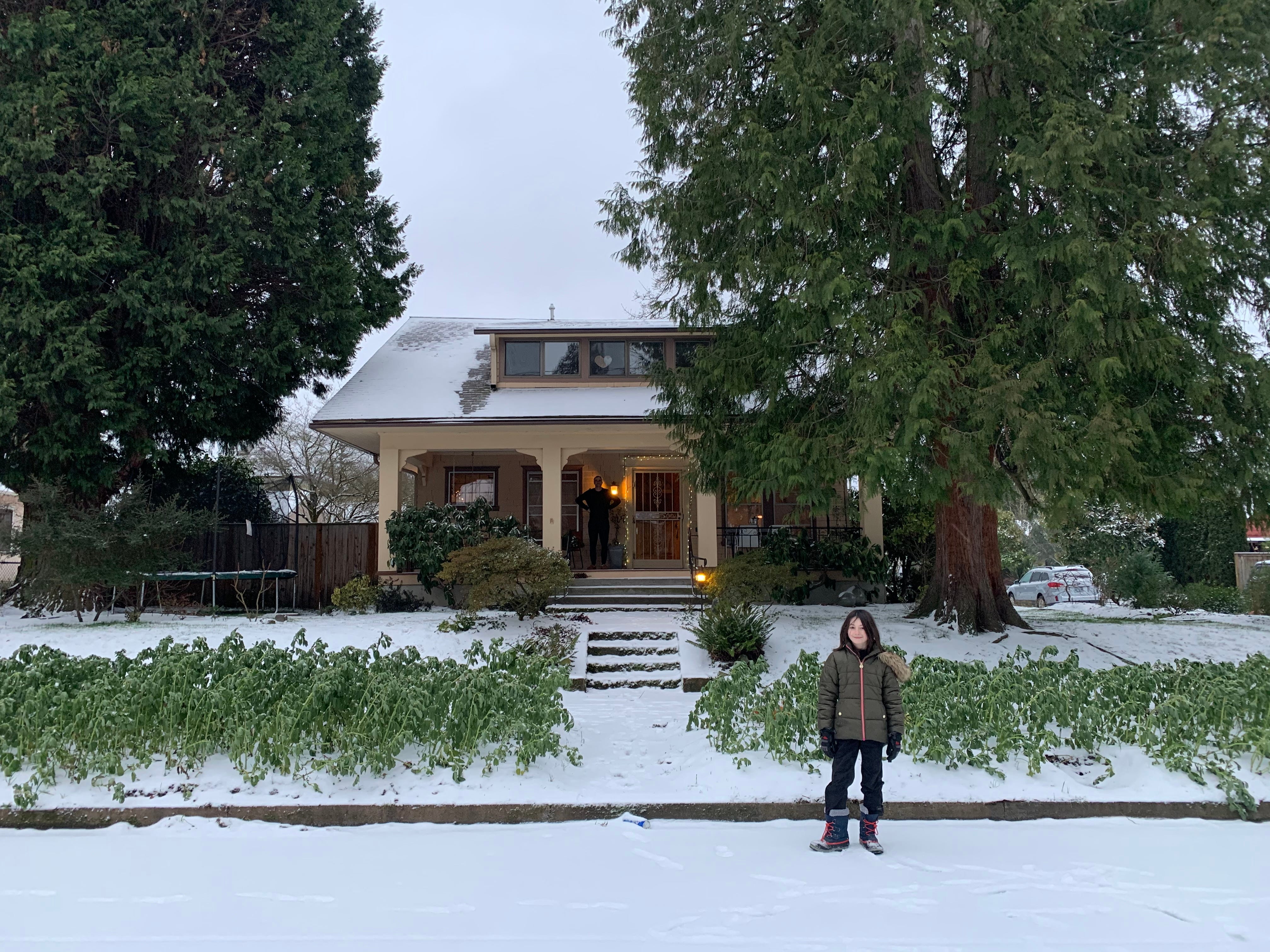
At one in the morning, I added three big logs to the fire and took a mental inventory of all the plants in the garden. The yard was mostly bare, aside from some large rhododendrons and azaleas, when we first moved in. We transformed the property over the years, gradually chipping away at the lawn and replacing it with native plants, shrubs, fruit trees, and flowering perennials. During the first year of the pandemic, we took on the project of gardening the enormous median strip between the sidewalk and the street. For months, I collected cardboard and spent the wee hours of the morning on gardening forums, reading through competing (and quite strongly held) opinions about the best way to kill sod. Eventually, I settled on a complex strategy of layering cardboard, hay, leaves, soil, and then planting a cover crop of fava beans to enrich the depleted land.
The project became a point of fascination for the many walkers and neighbors observing the real-time process of transformation taking place. Seeds from the poppies we planted, blooming in riotous profusion that first year, made their way all over the neighborhood, carried by our neighbors in cupped palms, to be planted in their yards. In the years afterward, on my daily walks, I’d notice these delicate little red reminders, perfect symbols of that particular time, and of the way that tending small pieces of the earth can afford us little bright spots of connection and extraordinary beauty.
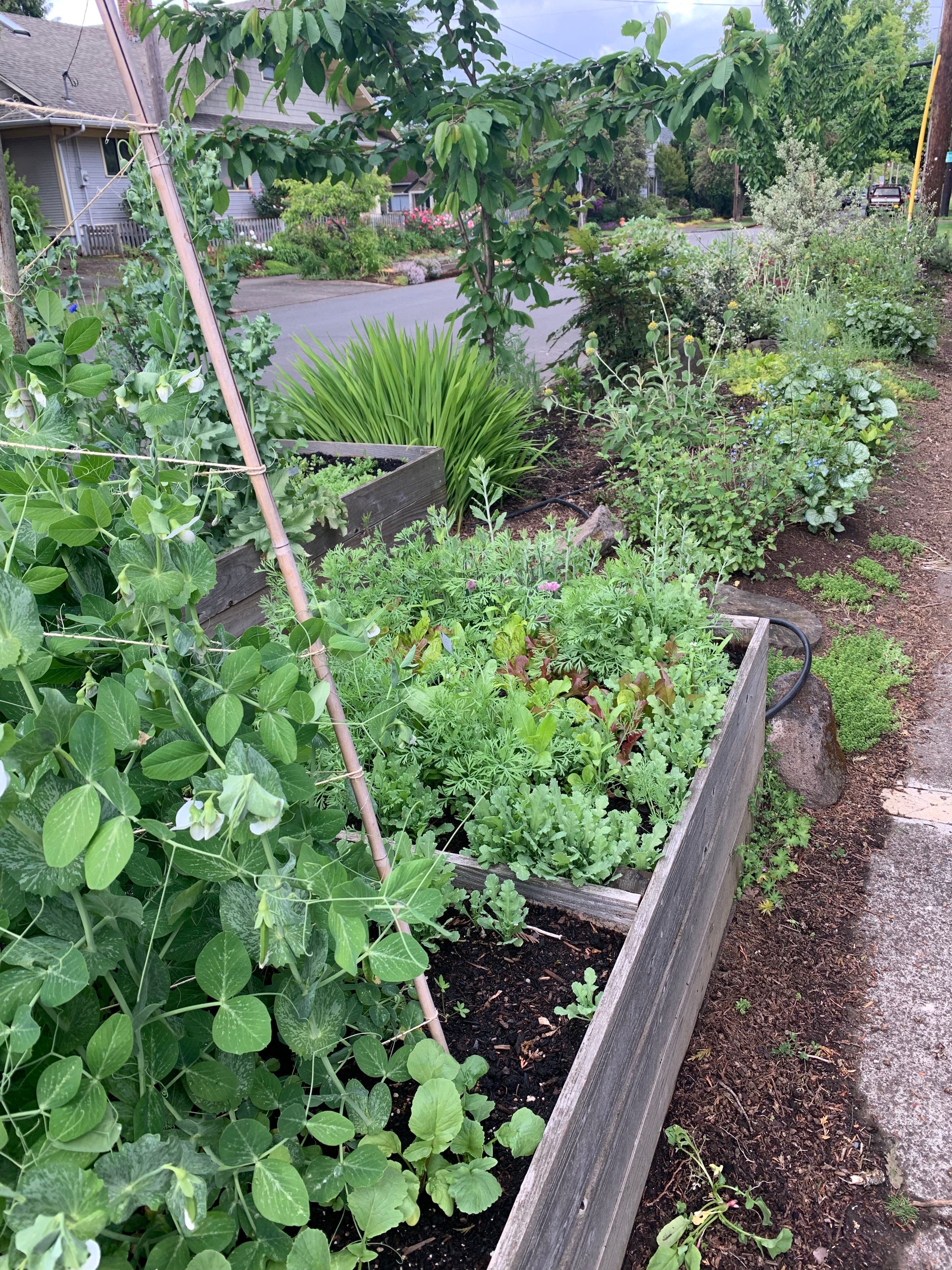
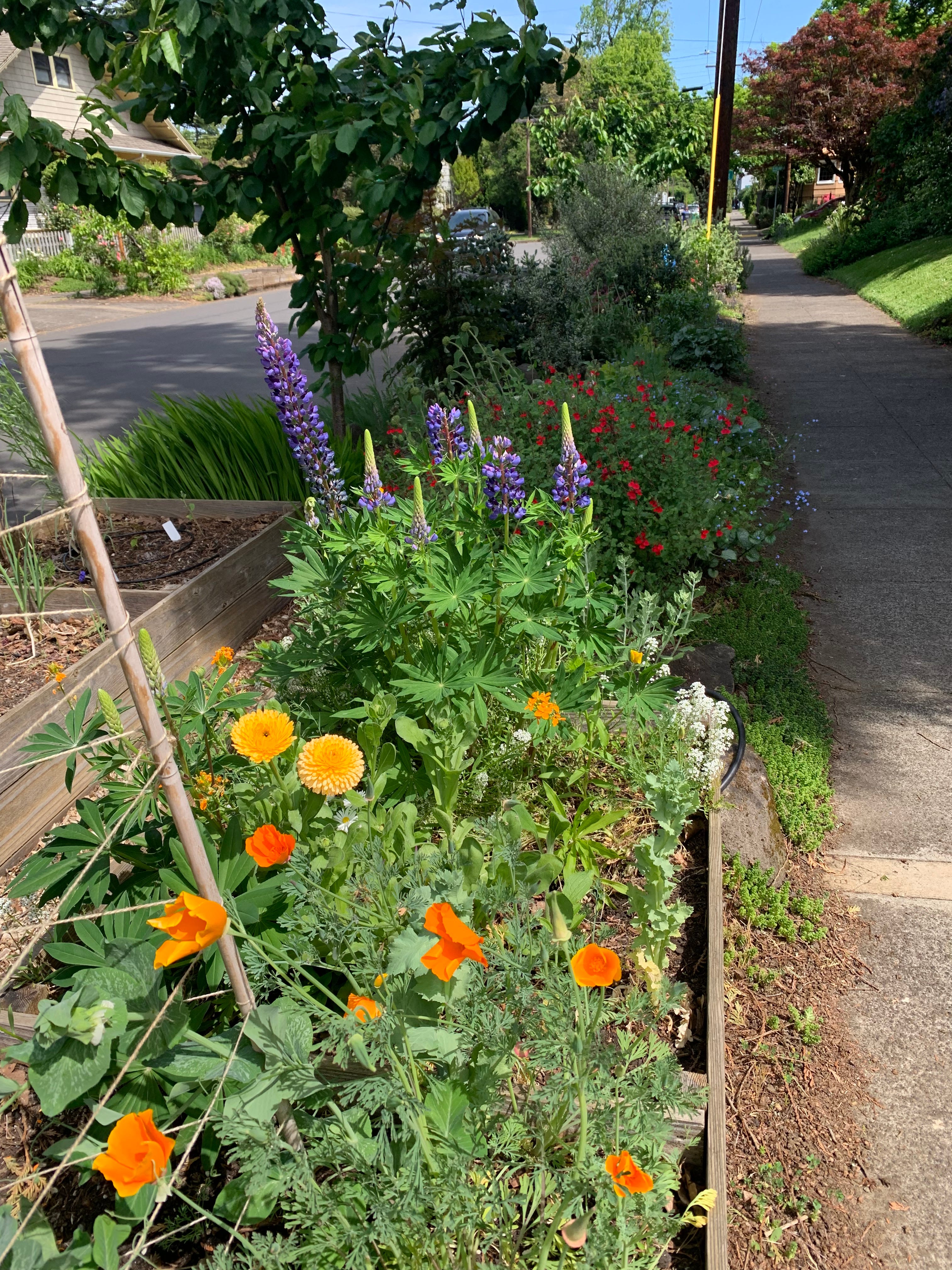
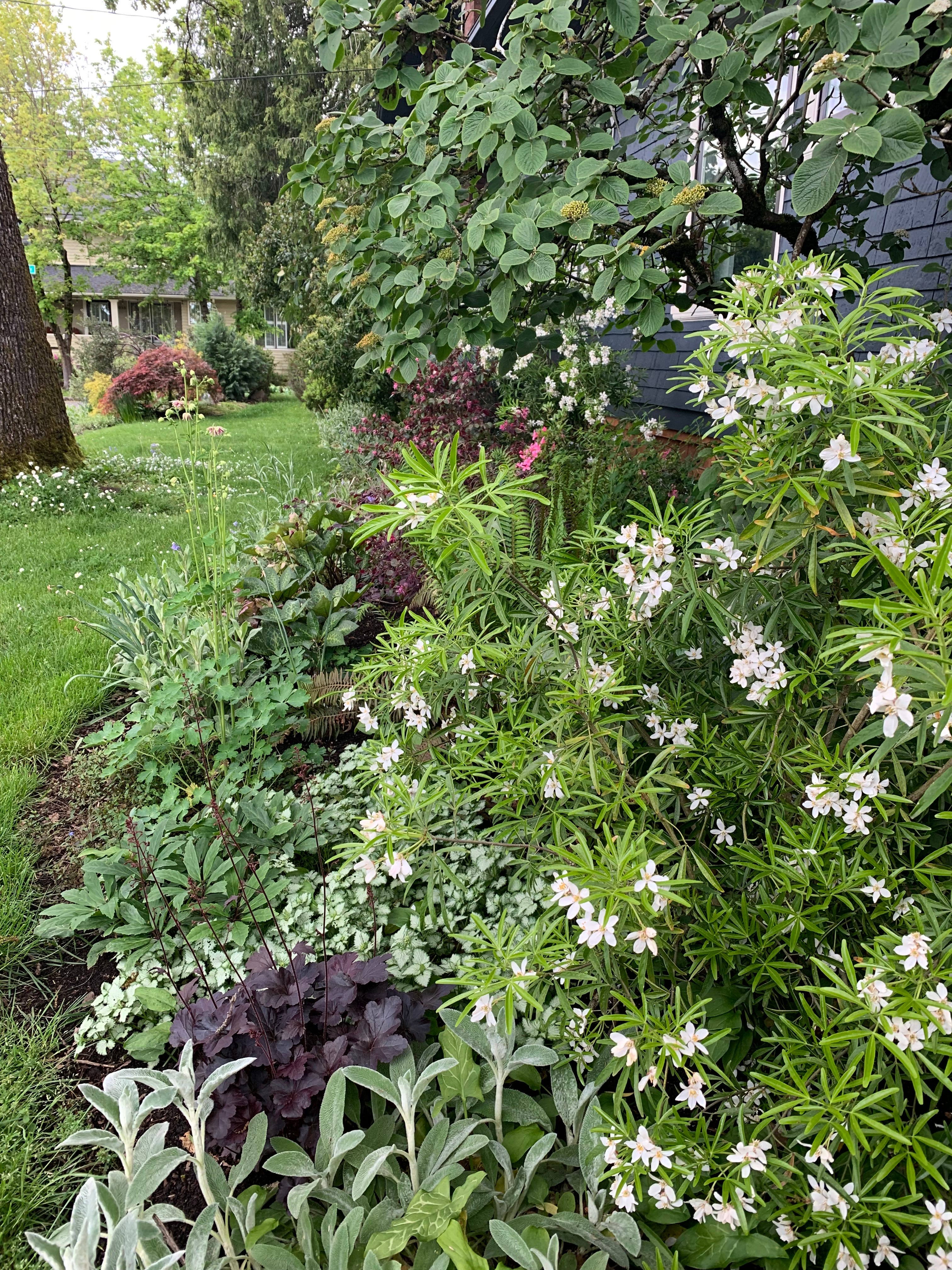
I’m notorious for moving plants around, and each plant in the yard had its own process of settling into its forever home. I’d plant something, watch it grow, then decide it needed more sun, or probably might do better next to a different plant. Sometimes the plant would be thriving, but most of the time, I’d make the change when I detected signs of struggle, or in more extreme cases, imminent death. Then, I’d get a shovel, dig up the plant, and put it in its new spot, talking to it as I patted fresh soil and compost around it. I’d assure the plant that this place would be better, even if I knew that there was a chance that no matter what interventions I put in place, the plant might very well not make it. But, most of them did.
It took me ten years to come to terms with the reality that I needed to allow our marriage to die. I fought like hell to resurrect it over and over again, grasping at the pieces of joy and connection that we still shared, innovating new solutions to old problems, leaning on friends, therapists, books, and podcasts, hoping to find the perfect answer to make it all okay. I ran myself ragged trying to creatively patch and fix each fissure and rent.
And then, I just stopped.
I allowed myself to be exhausted. To begin the process of letting go. I decided instead to celebrate the incredible gift of 25 years of romantic and creative partnership, and most importantly, an extraordinary child. I decided that it was okay to be the first person in my family to end a marriage. I decided to risk exile, heartbreak, recrimination, and others’ anger. I decided to give all of us a chance at real happiness, even if it meant inflicting pain to get there. I knew I might be perceived as a villain, as selfish, or as a bad parent. I allowed myself to grieve all the parts of me that wanted to make it work, to persist, and to cling to the story of imagined future.
As the fire continued to burn, I thought about the day in January that I’d come to terms with what I was about to set into motion. I’d spent the day mired in grief, knowing that our marriage was over, and terrified at the prospect of what would happen to all of us. I felt deeply that I could not leave the house, that I would not leave the house. I went for a walk to calm myself down before my late-afternoon therapy appointment (something akin to cleaning the house before you get it professionally cleaned). As I walked up the front steps, I noticed a package leaning against the door. Inside was a letter from Judy’s daughter. She wrote about growing up in the house and how much she loved living there. She wrote about driving by the house in the last decade, and noticing all the changes: the burgeoning garden, the new paint job, the new windows and repairs we’d made to the foundation. She expressed her gratitude for the ways that we’d taken care of her beloved home.
I wept as I held the letter.
In death there is also new life. A cycle of rebirth and renewal that begins with letting go.
At three in the morning, I spread a tarp and a blanket next to the fire. I curved my body as close to the heat as I could. I was neither awake nor asleep, drifting through a liminal space of dreamlessness. The dew from a heavy mist settled over my body. I’d let the marriage go, and now I was allowing myself to let the house go as well. I could feel the damp of the earth below me as I skirted the edge of sleep. The fire crackled as I breathed in the scents of summer grass and smoke.
That morning my friend Yianni had come over to help me move my mattress and dresser. The latex mattress was unreasonably heavy and unwieldy. We broke a framed print on the way down the stairs and barely succeeded in tacoing it into the back of the truck. By the time we were ready to move the dresser, I was tapped. We got the dresser all the way down the stairs and started to make the turn into the hallway when we realized we were stuck. We couldn’t get it through the doorway. That’s when I lost it. I stood with my arms around its bulky frame and gave up. After two weeks of hauling bags, boxes, and armloads of my belongings to the new place, I’d bottomed out. I was tired and scraped bare. Yianni let me cry for awhile, supporting the weight of the dresser with his body as I crumpled. Still, we had no choice but to lift the dresser back up the stairs and try again. On the second attempt, we just barely got it to clear the doorjamb.
Just before dawn, the last log collapsed with a loud boom. I stretched out, my back sore, fingers and toes chilled and numb. I gathered up my headlamp, water bottle, and blankets and trudged inside to make tea and get ready for work. I fed the cats, toasted a single piece of sourdough toast for Cleo, and sat on the bench in the sunroom looking out at the new day.
And that’s it for now.
As always, thank you, dear readers.
With love,
xo, Belle
“The breezes at dawn have secrets to tell you
Don’t go back to sleep!
You must ask for what you really want.
Don’t go back to sleep!
People are going back and forth
across the doorsill where the two worlds touch,
The door is round and open
Don’t go back to sleep!”
― Rumi
big sigh of letting go along with you, forever my dear sister
I truly felt this. All of it. Thank you, again. Nimmi